Newsletter Subscribe
Enter your email address below and subscribe to our newsletter

 ByJohn A
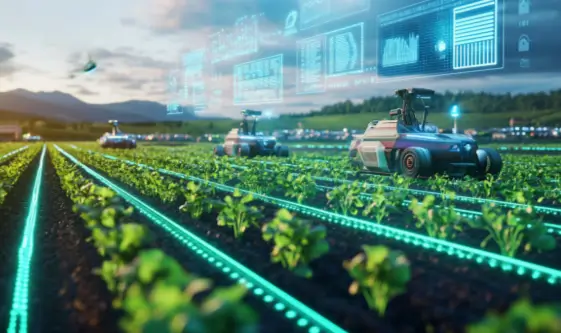
Artificial intelligence enhances farm efficiency by translating sensor data into precise actions. Models process soil, crop, and microclimate signals to guide targeted irrigation, fertilization, and energy use. This approach integrates diverse data streams for coherent decision-making and proactive maintenance. Early results show lower input waste and stable yields, but the full potential depends on governance, data quality, and scalable implementation. The next step is to examine how these elements influence cost and productivity over time.
AI-driven technologies optimize farm operations by enabling precise input application, real-time monitoring, and proactive maintenance. They support precision planning by aligning inputs to soil and crop conditions, reducing waste and environmental impact. Data trends inform scheduling and resource allocation, while predictive maintenance minimizes downtime and extends equipment life. The approach fosters operational resilience, efficiency, and autonomy, aligning with freedom-loving, efficiency-focused agrarian pursuits.
Sensor data acts as the pivotal input for decision-making, translating measurements from soil, crop, and microclimate sensors into actionable management moves.
Data integration combines disparate streams into a coherent picture, enabling rapid assessment and targeted interventions.
Validated models translate sensor signals into reliable actions, reducing uncertainty.
Continuous refinement ensures robustness, transparency, and adaptable thresholds that support informed, freedom-oriented farming decisions.
See also: earthviax
Efficient resource management in modern agriculture hinges on optimizing water, fertilizer, and energy use through AI-enabled decision systems. AI-driven models monitor soil moisture, nutrient availability, and energy usage, enabling targeted application schedules. The approach enhances water efficiency, reduces fertilizer waste, and lowers emissions. Data-driven insights examine soil respiration patterns to align irrigation with crop demand, sustaining yields and resilience.
Evaluating impact on cost savings, yields, and sustainability requires a data-driven assessment of AI-enabled resource management outcomes. The analysis highlights measurable reductions in input costs, improved crop yields, and long-term environmental benefits.
Crucial considerations include data privacy and model explainability, ensuring transparent decision processes.
Results support scalable adoption while maintaining governance, risk controls, and stakeholder trust across diverse farming operations.
AI models on farms manage data privacy through local processing, anonymization, and strict access controls; data sharing is minimized unless consented, while privacy controls enforce encryption, role-based permissions, and auditable trails to preserve farmer autonomy and trust.
AI cannot fully replace human agronomists; it augments expertise. It enhances AI expertise to support farm decision making, but human judgment remains essential for interpretation, ethics, and nuanced field realities. Data-driven insights complement, not substitute, professional stewardship.
Bias amplification looms as a major risk in farming algorithms, exaggerating inequities. Data inequities can skew outputs, misallocating resources and intensifying disparities; analysts warn that unchecked models threaten fair, precise decision-making across diverse agricultural contexts.
ROI visibility from AI tools varies; some farms see payback in months, others over several seasons. Analysts note cost tradeoffs include upfront software, hardware, and training versus yield gains, risk reduction, and labor efficiency. Data-driven, measured expectations guide adoption.
AI systems often run on affordable hardware, but upfront costs vary; 60% of growers report scalable options. The answer: cost considerations and hardware affordability depend on scale, data needs, and cloud versus edge deployment strategies.
Artificial intelligence enhances farm operations by translating diverse sensor streams into precise actions. Data-driven adjustments to irrigation, fertilization, and energy use reduce waste while sustaining yields. Performance indicators—water savings, input efficiency, and labor optimization—tend to align with measurable cost reductions and longer asset lifespans. While adoption scales with governance and interoperability, the overall trajectory favors improved resource stewardship. In practical terms, AI quietly sustains productivity, nudging efficiency forward without dramatic upheaval.